
A Chapter Closes: Ukrainian International Legion Dissolves
In recent months, there have been many rumours circulating regarding the disbandment of the International Legion subordinated to the Ukrainian Ground Forces. The first steps in this disbandment process were first reported on by MilitaryLand, and later confirmed by the Kyiv Independent as well as several other news outlets.
It is known, as reported by BBC News Ukraine, that the disbandment process is aimed to be completed by December 31, 2025, with three of the four battalions fully reformed or reassigned into new formations.
It is important to emphasize that the disbandment of the International Legion only covers the four battalions under its umbrella, and the disbandment process does not affect the International Legion of the Defense Intelligence of Ukraine in any way, and it remains fully operational. Additionally, the disbandment of the International Legion does not mean the postponement of recruitment for foreigners, as many other units continue to do so throughout the military.
This article aims to outline the confirmed disbandment timeline, units that have undergone reassignment, and the potential implications for foreign volunteers going forward.
Internal Challenges Before Disbandment
Before the beginning of dissolution, the International Legion showed uneven development. The 1st International Legion, also known as the 1st Infantry Battalion of the International Legion, had briefly expanded its Unmanned Aerial Vehicle Platoon to the size of a Company, indicating its commitment to keep up with technological innovations on the battlefield.
At the same time, challenges arose. MilitaryLand learned of the disbandment of a drone team inside Charlie Company, which shifted to only performing infantry assignments. It was also reported that only one platoon within Bravo Company remained combat capable.
Additionally, numerous brigades across several branches of the Ukrainian Defense Forces have begun forming their own foreign elements, further diluting manpower across the International Legions.
According to an article by Dzerkalo Tyzhhnia, Ruslan Myroshnychenko, founder and former commander of the 2nd International Legion, also known as the 2nd Infantry Battalion of the International Legion, stated that the unit had faced severe manpower shortages.
The manning levels of the battalion did not exceed 30 to 40% for much of the year, with the infantry component only consisting of 60 to 70 personnel instead of a maximum strength of approximately 450. His view attributed these shortcomings to the failures within the leadership of the Ukrainian Ground Forces, being unable to effectively develop and employ these units.
Furthermore, the 2nd International Legion was also subordinated to the 16th Army Corps, as reported by MilitaryLand, indicating a shift in effort to place the unit within a permanent command structure and defined area of responsibility, employing their use more effectively under the corps-level leadership formed largely from officers of the 92nd Assault Brigade.
The constant uneven development of these battalions made it difficult for them to develop beyond their chronic problems of fatigue, casualties, and a lack of manpower, also burdened by the fact that they were not integrated into a proper or permanent command structure promptly, making it difficult for them to plead their case to continue existing as a separate unit.
Disbandments and Reassignments
On December 9, 2025, Ukrainska Pravda reported the first formation to be reassigned, being the 1st International Legion. It was reported that this battalion would be transferred under the command of the 475th Assault Regiment, one of the newer assault units that had been expanded from a battalion in August 2025, reported by MilitaryLand.
The reporting also clarified that the 475th Assault Regiment is currently under the jurisdiction of the Command of the Ukrainian Ground Forces. While the formation of dedicated Assault Troops has commenced, they have not yet been officially established, meaning all assault formations remain as they are present. This was also brought up during an interview shared by the regiment on their YouTube channel.
According to a senior source within the regiment, he also stated that the transfer process was proceeding smoothly for the foreigners.
Later, on December 19, 2025, it was reported by Dzerkalo Tyzhnia that the 3rd International Legion, also known as the 3rd Special Purpose Battalion of the International Legion, had also been reassigned, likely also to the 475th Assault Regiment, making it the second unit to be disbanded.
According to the same report, the initial plans for the 4th International Legion were to transfer it to the new assault formation; however, it was reformed as a separate training centre responsible for the preparation of foreign volunteers and stateless persons.
The process of transfer also appears to be, in fact, facing many difficulties. Reportedly, there is little willingness among foreign volunteers in these line battalions to transfer into assault formations, with figures put at only a small percentage of 10 to 20% of the foreigners completing the transition from each battalion. At the same time, the majority exited the process through terminating their contract, going absent without leave, or leaving for other units that were more appealing to them.
Personnel who complete the transfer into the new formation will be consolidated into a single battalion within the 475th Assault Regiment and designated as the Foreign Legion Infantry Battalion, according to a report by BBC News Ukraine and a statement from the regiment’s Chief of Staff, Andriy Mishchenko.
The Future and Beyond
The disbandment of the International Legion’s three combat line battalions, alongside the reorganisation of its training unit, presents both advantages and challenges.
Consolidating foreign volunteers into a single foreign battalion under the 475th Assault Regiment resolves long-standing structural issues by eliminating multiple understrength, semi-independent formations and formally subordinating foreign personnel to an established unit.
Given the long operational history of the 1st and 3rd International Legions, fighting alongside the 92nd Assault Brigade, from which the 475th Assault Regiment was directly formed, this move provides continuity in their command relationships, provides foreigners greater access to adequate fire support elements, and clearer operational frameworks.
In an interview with the regiment, published on the unit’s YouTube channel, the newly consolidated Foreign Legion Infantry Battalion will also be receiving light vehicles, expanding the units operational capabilities. The recent performance of the regiment in coordination with other Ukrainian formations in the Kupyansk direction since early December 2025 demonstrates the effectiveness of this command structure and how it is a combat-capable formation.
At the same time, the consolidation also addresses chronic manpower issues that plagued the International Legions, particularly the maintenance of multiple understrength battalions, as exemplified by the lack of manpower, especially in the infantry, in the 2nd International Legion.
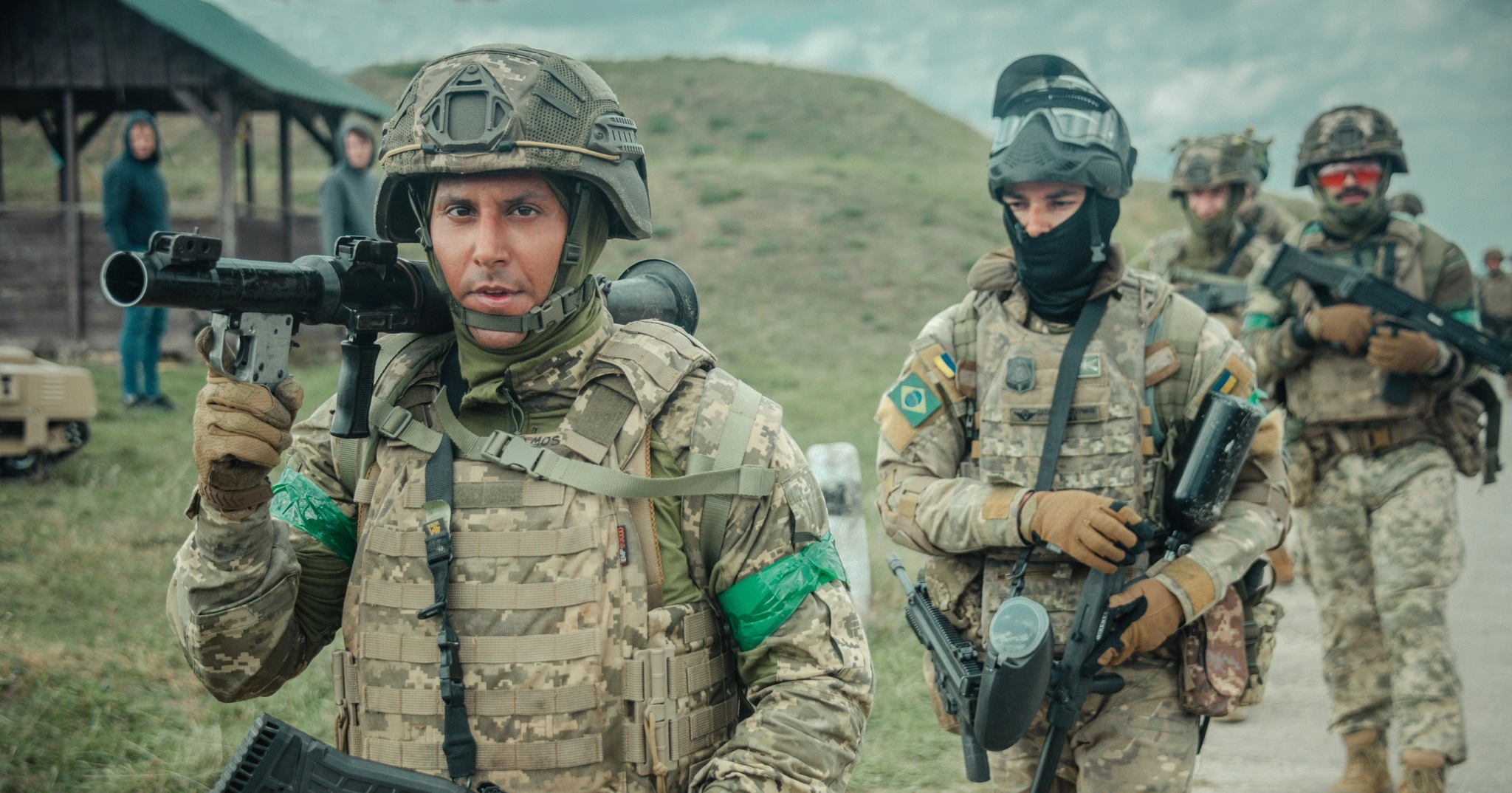
However, the disbandment has also created an atmosphere of uncertainty amongst foreigners within the three line battalions. As reported by the Kyiv Independent, many of the Legion’s personnel remain hesitant and fearful of their integration into assault formations, which holds mixed reputations among both foreign and Ukrainian servicemembers.
The dissolution of an umbrella formation, being the International Legion, will also continue to fragment and complicate the recruitment process for prospective foreign volunteers. The process already requires great amounts of individual initiative to navigate multiple avenues of joining several units across different branches.
The absence of a single, clearly defined point of contact for foreign applicants may also negatively impact the recruitment process, with people unsure on which unit they are joining and the implications of doing so.
It is reasonable to question whether the International Legion outlived its necessity. The increasing integration of foreigners into established, combat-effective units with proper command structures and organic support assets suggests that the original purpose of the formation has overstepped its need, no longer being required due to the fact that foreigners can serve in well-established units.
Conclusion
The dissolution of the International Legion marks a significant transition in how foreign volunteers are employed within the Ukrainian Defense Forces. While opinions vary regarding its combat effectiveness and long-term necessity, it served an important role in the early phase of the conflict, providing an entry point for hundreds of foreign volunteers.
Following its disbandment, experienced personnel are expected to be absorbed by other formations actively recruiting foreigners. This is already evident within the 3rd Army Corps and the International Legion of the Defense Intelligence of Ukraine. Illustrating a shift away from a centralised foreign volunteer structure towards integration across various units of different scales.
Regardless of the varying assessments of its performance, the unit provided combat experience to hundreds, and possibly thousands of volunteers, helping to shape the evolving role of foreigners in Ukraine. As such, it will be remembered as one of the most prominent volunteer formations in modern history. The sacrifices of those who served and fell for a free and sovereign Ukraine will not be forgotten.
If you enjoy this content, the best way to support our site is by sharing it and following us on X, Bluesky and Facebook.
Related posts


Our community
Mentioned Units




Support us
Keep the cap badge