
The Systematic Cover-up Inside 58th Motorized Brigade
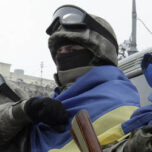
When the Russian army broke through Ukraine’s front line at a new point in Kharkiv Oblast last month, the immediate question was who would be held responsible. The answer the system has given — quietly, quickly and reveals something far more troubling than a single battlefield failure, as reported by Maryana Bezuhla, a People’s Deputy of Ukraine.
Colonel Ivan Shnyr, commander of the 58th Separate Motorized Brigade, has been suspended. But not for the conduct his own soldiers have spent months documenting: alleged extortion of troops, physical violence against subordinates, and procurement fraud on a significant scale. He was suspended for losing the village of Veterynarne.
A chain of convenient outcomes
The 14th Army Corps commander Zhytnyak moved against Shnyr unilaterally, without authorization from above. It was the kind of decisive act the situation demanded. Now, according to multiple accounts from within the brigade, Zhytnyak himself is being positioned as the one who overstepped.
Shnyr, meanwhile, has not been detained, charged, or confined to quarters. Having reportedly collected a personal fund from his own troops — soldiers’ pay and allowances — he has simply gone on leave. The suspension, in effect, is a holiday.
The deputy commander presents an equally stark contrast. Caught in the act of accepting a bribe, he was released on bail set at one million hryvnias. He remains free. The head of the brigade’s motor pool, when questions arose about vehicle procurement, chose a different exit: he went absent without leave — officially classified as a deserter — and disappeared.
The vehicles at the center of those procurement questions never arrived at the brigade. Contracts for their purchase, written at inflated prices, are now reportedly being destroyed and rewritten with backdated signatures. Procurement records are being falsified. Signatures are being forged. This is happening, according to those inside the brigade, right now.
What soldiers are reporting from inside the brigade:
- Shnyr has reportedly collected a personal fund from troops and departed on leave after suspension
- His deputy, Maksym Bobrovskyi, caught accepting a bribe, has been released on bail of one million hryvnias
- The head of the motor pool disappeared into AWOL status after questions arose about vehicle procurement
- A battalion commander who held the defense of Veterynarne has also been suspended
- Another battalion commander accused of extortion and assaulting soldiers is reportedly seeking a transfer to the 82nd Air Assault Brigade as head of combat training
- The deputy in charge of moral and psychological affairs, suspected of enabling the abuse, has been demoted rather than investigated
- More than one hundred soldiers went absent without leave in a single month — predominantly from units where extortion was most severe
The investigation that reached its verdict first
A military inspection is under way. It has already signalled its conclusion: no evidence of corruption found. The phrase is being used before the process is complete, suggesting the outcome was determined before investigators arrived.
Inside the brigade, two parallel realities now exist. In the official version, the situation is under control. In the version soldiers are living, people are being driven to give statements elsewhere, documentation is being gathered in secret, and cooperation with the military counterintelligence service is ongoing.
The question that goes beyond one brigade
The 58th Brigade is not an isolated case. It is a working example of how the system functions when accountability threatens those inside it. The question it poses is blunt: in the current structure of Ukraine’s military, is it possible to beat soldiers and receive a promotion? To steal and simply transfer? To lose ground at the front and remain a trusted insider? And for those who speak — to have their mouths shut by inspections whose conclusions are already written?
The answer the system is providing, through its actions rather than its public statements, is that all of this is possible. Because compliant commanders are useful. They follow orders when ordered. They write the required reports. They do not find violations when told not to find them.
“Those who speak are sent somewhere they won’t return from. Those who steal are transferred. Those who fail are protected. This is not an exception. This is how the machine works.”
The soldiers of the 58th are collecting their evidence. Some have already traveled elsewhere to give testimony. Whether that testimony will change anything depends on whether there is, somewhere in the chain of command, a level at which the system is still capable of holding itself to account.
The brigade responds
Following Bezuhla’s original publication, the Ukrainian outlet Censor.NET sought an official response from the brigade. The answers it received amount to a comprehensive denial — though one that is careful, in places, to acknowledge the existence of proceedings without accepting any responsibility for what prompted them.
On the core allegations of systematic extortion, the brigade stated that no evidence of organized, forced collection of money from personnel had been found. Routine audits of procurement and logistics, it said, had uncovered no violations. Soldiers sent to frontline positions, the brigade insisted, were deployed to reinforce difficult operational situations.
On the General Staff inspection — which began on 4 April 2026 with a completion date of 4 May — the brigade stated that none of the issues under review had yet been confirmed, while affirming full cooperation with the commission.
The most carefully worded response concerned deputy commander Maksym Bobrovskyi, who faces a criminal suspicion of accepting unlawful benefit in exchange for influence over decisions. The brigade acknowledged the suspicion and the ongoing pre-trial investigation, but stressed that guilt has neither been proven nor disproven.
If you enjoy this content, the best way to support our site is by sharing it and following us on X, Bluesky and Facebook.
Topics:
Related posts


Our community
Mentioned Units


Support us

It must be so terribly disheartening for the soldiers. They risk their lifes and wellbeing, get mistreated and extorted from, yet the country they fight for looks the other way and the perpetrator gets away with it. This will hurt the defence of Ukraine far more than any russian attack.
The Russians advanced about 1 km² into Veterynarne on 10 April, and the area still isn’t fully under their control. That’s a very limited and contested gain – not what most would consider a battlefield failure. If that’s the basis for Colonel Shnyr’s suspension, the official explanation doesn’t add up.