Speculation Grows Over Syrskyi’s Future: Who Could Replace Him?
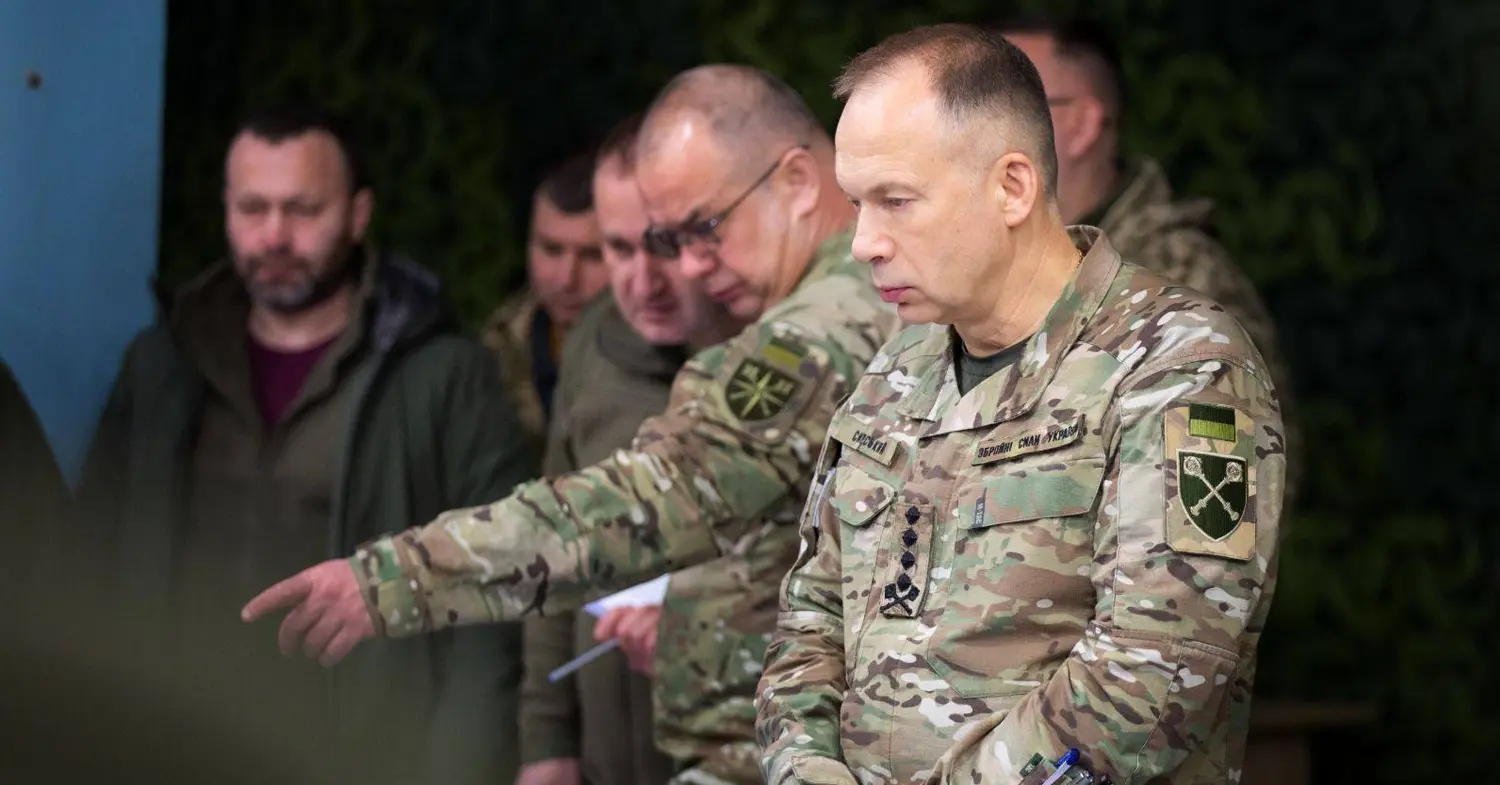
President Volodymyr Zelenskyy’s announcement of Defense Minister Mykhailo Fedorov’s resignation, coupled with the minister’s remarks that meaningful military reforms could not be implemented under the current Commander-in-Chief, General Oleksandr Syrskyi, has reignited speculation over a possible change in Ukraine’s military leadership.
More recently, the Financial Times, citing sources familiar with the matter, reported that Zelenskyy is prepared to dismiss Syrskyi if he can identify a successor capable of ensuring a smooth transition of command while maintaining Ukraine’s defenses along the more than 1,200-kilometer front line.
In an apparent effort to ease tensions within the Assault Forces—whose units are referred as “Syrskyi’s pocket units”—the president announced the creation of the Joint Rapid Reaction Forces, a new formation intended to reorganize the assault component of the Armed Forces.
However, the subsequent reshuffle of the government and Fedorov’s departure prompted demonstrations in Kyiv and several other cities, with protesters calling for Syrskyi’s dismissal. The developments have fueled debate over whether the commander-in-chief should be replaced and, if so, who could realistically succeed him.
Who Could Replace Syrskyi?
Replacing the commander-in-chief is not as simple as appointing a successful brigade commander. Leading a brigade requires tactical expertise, while commanding the entire Armed Forces demands strategic planning, operational experience, and the ability to coordinate multiple branches of the military.
Under Ukraine’s command structure, the commander-in-chief is expected to have progressed through every level of command—from tactical and operational leadership to operational-strategic commands such as Operational-Strategic Groups of Forces “Khortytsia,” “Tavria,” or “Dnipro.” Experience at the corps level alone is generally considered insufficient for the country’s highest military post.

These requirements reflect reforms introduced after Russia’s 2014 annexation of Crimea, when Ukraine began restructuring its military along NATO standards. Legislation adopted in 2020 further separated the responsibilities of the Commander-in-Chief and the Chief of the General Staff, moving away from the Soviet command model.
The Armed Forces have since adopted the NATO-style J-staff structure and the Military Decision-Making Process (MDMP). As a result, the commander-in-chief must possess not only battlefield experience but also expertise in strategic planning, force integration, joint operations, and cooperation with international partners.
Potential Candidates
Several senior Ukrainian generals possess the operational and strategic experience required for the position. Among those frequently mentioned are:
- Andriy Hnatov, Chief of the General Staff, with extensive experience in strategic planning.
- Ihor Skibiuk, Deputy Chief of the General Staff and former commander of the Air Assault Forces.
- Mykhailo Drapatyi, Commander of the Joint Forces, who previously led the Ground Forces and operational-strategic groups “Khortytsia” and “Dnipro.”
- Oleh Apostol, Commander of the Air Assault Forces and former Deputy Commander-in-Chief.
- Hennadiy Shapovalov, Commander of the Ground Forces with extensive headquarters and operational command experience.
- Viktor Nikolyuk, commander responsible for operations in the Donetsk sector under Operational Task Force East.
- Oleksandr Tarnavskyi, former commander of the Operational-Strategic Group of Forces “Tavria,” now commander of 9th Army Corps.
If you enjoy this content, the best way to support our site is by sharing it and following us on X, Bluesky and Facebook.
Topics:
Related posts
Our community
Mentioned Units
No unit mentioned.Support us