Skilled Officers Leaving Ukrainian Army Amid Totalitarian Command Style
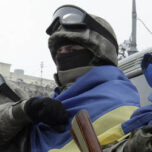
Amid the increasingly difficult operational situation in the east, where Russian forces continue their slow but persistent advance toward Kramatorsk, and despite localized tactical successes achieved by Ukrainian formations in the southern sector, tensions within the Armed Forces of Ukraine continue to mount. A growing number of experienced officers and field commanders are reportedly leaving military service, citing Commander-in-Chief Gen. Oleksandr Syrskyi’s harsh command style, excessive micromanagement, and what many describe as the growing authoritarianism of the military leadership.
One of the latest high-profile resignations came from Dmytro Kashchenko — Hero of Ukraine, former commander of the 58th Motorized Brigade, and former deputy commander of the 20th Army Corps — who recently submitted his dismissal from the Armed Forces of Ukraine. In an interview with NV.ua, Kashchenko criticized the current command climate under Syrskyi, while noting that he held no personal grudge against the commander-in-chief, under whom he had previously advanced through the ranks during Syrskyi’s tenure as commander of the Ground Forces.
Transition Toward Authoritarianism
“The main reason for my dismissal was the transition of the Armed Forces of Ukraine, after the dismissal of Valerii Zaluzhnyi, toward totalitarianism and authoritarianism,” Kashchenko stated. “This is a command style that does not tolerate compromise decisions and does not accept alternative opinions. Any differing view is perceived as hostile, and eventually you yourself begin to be treated as an enemy. Having grounds for dismissal, and not wanting to participate in what was happening, I decided to resign.”
According to Kashchenko, the decisive moment came during a temporary assignment as acting commander of the 110th Mechanized Brigade, where he says he was pressured into launching an assault operation against a settlement despite unfavorable conditions.
“At that time, there was an order to storm a certain settlement, which I refused,” сказав він. “One of my proposals was instead to establish defensive positions, prepare assault groups properly, and then conduct clearance operations against Russian infiltration units.”
Kashchenko argued that many newly mobilized soldiers are being committed to offensive actions without sufficient combat conditioning or psychological preparation. He described the importance of gradually acclimating infantrymen to combat realities through limited engagements before committing them to major assaults.
Criticism of Syrskyi’s Command Style
The former brigade commander also criticized Syrskyi’s direct involvement in tactical-level decision-making, arguing that the commander-in-chief has become overly focused on brigade and corps operations rather than long-term force development and strategic planning.
“The commander-in-chief should not be constantly interfering in corps-level management,” Kashchenko said. “His primary task should be the development of the Armed Forces, not personally managing unit positions the way he does now. The fact that he is constantly present at corps and brigade headquarters is not a positive sign. I know this from the inside. It creates unnecessary pressure and additional stress for officers already carrying out combat missions.”
He further argued that frontline commanders are frequently blamed for territorial losses while senior leadership avoids responsibility for failed appointments or flawed operational planning.
“If a commander loses a position, he is immediately removed and blamed,” Kashchenko stated. “But nobody asks whether that commander was actually competent enough in the first place — and after all, somebody appointed him.”
Corps-Division Reform
Kashchenko also revisited the long-discussed concept of transitioning the Armed Forces of Ukraine toward a corps-division structure — a reform he said had originally been supported by former Commander-in-Chief Valerii Zaluzhnyi and former Chief of the General Staff Serhii Shaptala.
“A brigade structure works for localized conflicts, but divisions are built for waging large-scale war,” сказав він. “You could take experienced brigades such as the 93rd, 28th, 72nd, or the 3rd Assault Brigade and build divisions around them. Conduct testing, evaluate the results, and develop from there.”
According to Kashchenko, Ukraine’s long-term ability to hold the line against Russian forces depends not on matching manpower losses, but on restructuring the military into a more technologically capable and operationally coherent force.
“We must understand that we will not stop Russian bodies with our own bodies,” he concluded. “We need to stop them technologically. A corps-division structure would be ideal for this war.”
Якщо вам сподобався цей контент, найкращий спосіб підтримати наш сайт - поділитися ним і слідкувати за нами на X, Блюскі і Facebook.
Теми:
Пов'язані публікації


Наша спільнота
Згадані підрозділи

Підтримайте нас